7 Signs You Need a Professional Lawn Service
Patchy growth, missed mowings, rising weeds — signs your Hartford County lawn needs a professional service. When DIY stops paying off.
We often see property owners shoulder the heavy burden of DIY yard work until a specific breaking point forces a change.
A back injury, an expanding commute, or an unexpected HOA notice usually triggers that first phone call to discuss the signs you need professional lawn service.
Our team of property maintenance professionals understands how quickly a manageable weekend chore transforms into an overwhelming seasonal source of stress. The workload easily gets out of hand during rapid spring growth cycles.
Let’s explore the seven most common signals indicating it is time to step back and bring in expert help.
1. Patchy Growth and Bare Spots
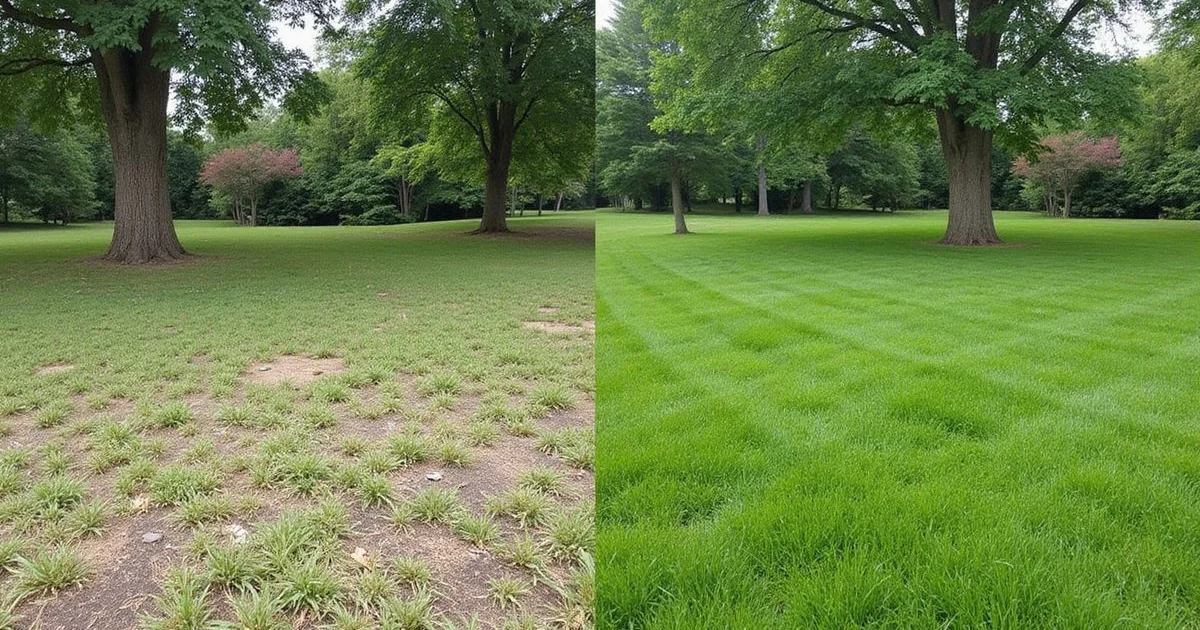
If you have visible bare spots, thinning sections, or areas where grass just will not fill in, a compounding soil issue is usually the culprit. Ignoring these patches allows the surrounding dirt to degrade further each year.
Our technicians typically start by pulling soil samples to identify the exact nutrient deficiencies causing the thinning. The University of Connecticut Soil Nutrient Analysis Lab offers a standard test for $12 that reveals pH levels and missing macronutrients. Guessing on fertilizer without this specific data wastes money and delays recovery.
Fixing these bare patches requires a sequenced approach over a full growing season. Here are the core steps to repair a patchy yard:
- Conduct soil testing: Identify exact pH and nutrient gaps before applying products.
- Perform core aeration: Break up the compacted top layer of dirt to allow seed-to-soil contact.
- Apply premium overseeding: Introduce resilient grass varieties into the thinned areas.
- Execute a sequenced fertilization program: Feed the new seedlings at specific intervals to ensure deep root establishment.
2. Missed Weekly Mowings
When a week becomes two weeks, the turf ends up needing a brutal rebound cut that severely stresses the grass. This pattern repeats throughout the summer, and the yard never fully recovers its natural density. Our companion guide on how often to mow lawn in Connecticut walks through the seasonal cadence in detail.
We consistently warn clients against violating the fundamental one-third rule of mowing. United States Department of Agriculture scientists established this golden rule decades ago, stating you should never remove more than one-third of the grass blade height in a single session. Cutting a six-inch blade down to two inches in one pass shocks the plant stem and halts root growth.
To maintain optimal health, property owners need to follow a strict cutting schedule.
- Spring peak growth: Mow every four to five days.
- Summer heat dormancy: Mow every seven to ten days.
- Fall recovery: Return to a weekly schedule to process falling leaves.
3. Rising Weed Pressure
Crabgrass takeover, expanding broadleaf weed patches, and spreading clover all indicate dropping competitive density in your yard. Once aggressive weeds get a foothold in a thin patch of grass, they accelerate the decline of the surrounding healthy turf.
Our application crews time pre-emergent treatments specifically around regional soil temperatures. Crabgrass seeds begin to germinate when the top two inches of soil reach 55 degrees Fahrenheit for several consecutive days, which typically happens in late April across the Northeast and Midwest. Missing this crucial biological window by even a few days renders preventative treatments completely useless.
You need a proactive strategy to stop weed pressure before it surfaces.
| Weed Type | Treatment Strategy | Critical Timing |
|---|---|---|
| Crabgrass | Pre-emergent barrier | Before soil hits 55 degrees |
| Dandelions | Post-emergent spray | Early spring during active growth |
| Clover | Targeted broadleaf control | Late spring or early fall |
4. Compaction Signs
Water pooling on the grass after a heavy rain, brown spots that emerge despite watering, and stiff dirt are classic compaction warnings. Hartford County clay soils compact very easily, especially in high-traffic zones near driveways and play areas.
We use commercial core aerators to mechanically relieve this severe soil tension. Effective aeration requires pulling solid plugs of dirt that are three-quarters of an inch wide and up to three inches deep. Iowa State University extension experts note that a properly aerated space should have 20 to 40 holes per square foot to genuinely improve oxygen and water flow to the roots.
Adding more water to a compacted yard simply creates runoff and shallow root systems. The permanent fix is annual core aeration combined with organic matter topdressing.
Professional Insight: Attempting to fix hard, compacted clay soil by simply watering it more frequently is a common mistake that actually encourages fungal diseases rather than deep root growth.
5. Equipment Cost Reality Check
A reliable residential mower runs between $700 and $2,000 depending on the total lot size. The initial purchase price is just the beginning of the financial commitment required to maintain a property properly.
Our accounting of standard homeowner expenses often surprises new clients. Add a quality string trimmer for $200, a leaf blower for $150, plus the ongoing costs of gas, oil, spark plugs, and annual blade sharpening. Storage space in a garage or shed carries its own hidden premium.
Consider the actual annual breakdown of DIY vs professional lawn care equipment expenses.
| Expense Category | Average DIY Cost (Annualized) | Professional Service Equivalent |
|---|---|---|
| Mower Depreciation & Maintenance | $150 to $300 | Included in weekly rate |
| Handheld Tools (Trimmer/Blower) | $75 to $100 | Included in weekly rate |
| Fuel, Oil, and Consumables | $50 to $100 | Included in weekly rate |
When you run the complete equipment math, the total gets incredibly close to the cost of one year of professional service for many local properties.
6. Time Burden
Summers across the United States pass by incredibly fast. A standard residential yard typically takes 1.5 to 3 hours of manual work every single week when you factor in mowing, trimming, edging, and the final blow-down.
We encourage property owners to calculate the actual value of their weekend hours. The 2024 American Time Use Survey from the Bureau of Labor Statistics found that individuals engaging in yard care spend an average of two hours on the task per day they work on it. Across a standard twenty-week season, that translates to 40 hours of lost summer weekends.
Reclaiming those 40 hours is often the primary reason property owners finally hand the job over to a crew. You have to decide if the financial savings of doing it yourself outweigh the heavy cost of your free time.
Here is a quick look at the typical weekly time commitment:
- Mowing and bagging: 45 to 60 minutes
- String trimming perimeters: 20 to 30 minutes
- Edging driveways and walks: 15 to 20 minutes
- Blowing debris and cleanup: 10 to 15 minutes
7. Lawn-Stress Signals Are Signs You Need a Professional Lawn Service
Browning sections, circular fungus patterns, sudden pest damage, and unexplained bare patches all signal turf stress that is very difficult to diagnose accurately. Misidentifying the root cause often leads to applying the wrong chemical, which wastes money and worsens the damage.
We train our field staff to identify specific regional threats during their first property walk-around. For example, circular light-brown patches bordered by dark rings often indicate Rhizoctonia solani, commonly known as brown patch fungus. This destructive disease thrives across the country during humid summer nights when temperatures stay above 65 degrees Fahrenheit, and it requires entirely different treatments than insect damage.
A professional assessment removes the guesswork from property management.
- Visual diagnosis: Identifying specific fungus strains or pest infestations quickly.
- Targeted treatment: Applying the exact product needed to cure the specific disease.
- Preventative adjustment: Altering watering schedules to prevent future fungal blooms.
What Comes Next
If you are seeing more than two or three of these warning signs, it is time to hire a lawn service and let the experts handle the heavy lifting. The immediate improvement in curb appeal and the massive amount of free time recovered make the transition highly rewarding.
We send out free written estimates within 24 to 48 hours of an on-site visit. Securing a spot on a weekly lawn maintenance plan is our starting point for most properties, ensuring your grass receives consistent care without the weekend hassle.
Make the call today to address the signs you need professional lawn service, protect your property value, and reclaim your summer schedule.
Related Service
Learn more about Lawn Mowing & Maintenance
Ready to book? Get a free written estimate for lawn mowing & maintenance from our Hartford County team.
Visit the Lawn Mowing & Maintenance Page